
10 Compliance Automation Software Tools Compared
The popular advice says to choose one compliance automation software platform and let it handle everything, from policy management to audit evidence to underwriting quality. That sounds neat, but it blurs three different jobs, governance, operations, and decision review. A broad GRC suite can manage policies, regulatory change, control libraries, and audit trails. An evidence platform can keep controls, tests, and artifacts organized. A specialized underwriting QA layer can inspect the note itself before a policy is bound, which is a different control point entirely.
That distinction matters because the compliance software market is now large enough that buyers are choosing infrastructure, not a side tool. One estimate places the market at USD 35.37 billion in 2025 and USD 74.12 billion by 2031, with a 12.67% CAGR over 2026 to 2031, while another puts it at USD 35.82 billion in 2025 and USD 78.85 billion by 2033 (Mordor Intelligence). At the same time, the automated compliance testing segment is projected to grow from USD 1.27 billion in 2025 to USD 3.04 billion by 2031, and the broader regulatory compliance management software market is estimated at USD 12.41 billion in 2025 (WorldMetrics).
Use this list by asking a simple question first. Do you need a system for policy and regulatory management, continuous monitoring, evidence collection, or underwriting decision review? The answer changes the right tool. Broad GRC suites can support underwriting governance. Evidence platforms can reduce audit pain. FigTrig goes directly at underwriting note quality before binding, which is why it belongs in the same comparison even though it isn't trying to be a full GRC suite.
Table of Contents
- 1. FigTrig
- 2. OneTrust
- 3. SAI360
- 4. MetricStream ConnectedGRC
- 5. Archer
- 6. LogicGate Risk Cloud
- 7. Hyperproof
- 8. Drata
- 9. Vanta
- 10. Secureframe
- Top 10 Compliance Automation Tools Comparison
- Match the Tool to the Control Point
1. FigTrig
FigTrig is the clearest choice here when the job is underwriting review, not enterprise compliance administration. It reads 100% of commercial underwriting notes against the insurer's own uploaded guidelines, then returns plain-language, explainable flags that point to the exact rulebook section. That means the control point sits where underwriting risk is created, before binding, instead of after the fact in a sample-based QA process.
The workflow fit is unusually narrow in a useful way. FigTrig ingests PDFs, Word documents, and internal manuals, then evaluates each note in seconds and creates an audit-ready trail for compliance, audit, and claims teams. It also sits alongside existing systems through REST API, webhooks, CSV, and SFTP, so underwriting teams do not have to rip out their current stack to get coverage. The platform is built with GDPR-aligned controls, including tenant isolation and data residency options, and customer data is not used to train models.
Practical rule: if the question is, “Did this underwriter document the decision well enough to defend it later?”, a note-level QA layer is the right control. If the question is, “What changed in our policy library this quarter?”, a GRC platform is the better fit.
FigTrig's strongest differentiator is that it targets the gap between manual review and actual decision volume. The publisher states that manual QA often covers only 5% to 10% of decisions, while FigTrig reviews all notes. That's not a small efficiency story, it's a coverage story. Real pilots have flagged £4.2M+ before binding, and a Senior Underwriter testimonial noted a material pricing-rationale gap caught within seconds, which is the kind of issue broad compliance tools usually don't inspect at the note level.
Pros
- Full-coverage review of underwriting notes, instead of relying on samples.
- Explainable flags tied to exact guideline sections, which helps with audit defense.
- Fast deployment, with teams reviewing live notes within about one week.
- Strong data controls, including tenant isolation and data residency choices.
- Clear operating value, especially for pricing rationale, authority, documentation quality, and loss-history checks.
Cons
- Not a substitute for human judgment, underwriters still own final decisions.
- Commercial terms are not public, so pricing and integration fees require a vendor conversation.
Website: FigTrig
Image: 
2. OneTrust
OneTrust is best understood as a broad enterprise compliance and privacy platform, not a narrow underwriting QA tool. Its value sits in policy workflows, consent handling, DSAR automation, third-party risk, and AI governance, which makes it useful for companies that want to centralize many governance functions in one vendor. That breadth is exactly why it shows up in enterprise software budgets, and exactly why it can be more platform than some underwriting teams need.
For underwriting-adjacent use cases, OneTrust helps most where the organization needs governance around personal data, vendor risk, and privacy obligations that touch the underwriting process. It can support the control environment around underwriting, especially if customer data flows through multiple systems and approval paths. It does not, however, replace a domain-specific reviewer that compares a note against insurer-specific underwriting guidelines before binding.
The trade-off is scope. OneTrust's modular setup, with suites for tech risk and compliance, third-party risk, and privacy automation, can be powerful, but modular licensing can also make procurement and rollout more complex. That's the right trade if compliance leaders want a single enterprise program across privacy and governance. It's the wrong trade if the main pain is underwriting note quality.
One practical way to think about OneTrust is this. It governs the process and the data environment around underwriting, but it does not inspect the underwriting rationale itself the way a dedicated QA layer does. For insurers and lenders, that means it belongs in the governance stack, not in the final decision-validation seat.
Website: OneTrust
Internal reference for underwriting QA comparison: FigTrig
Image: 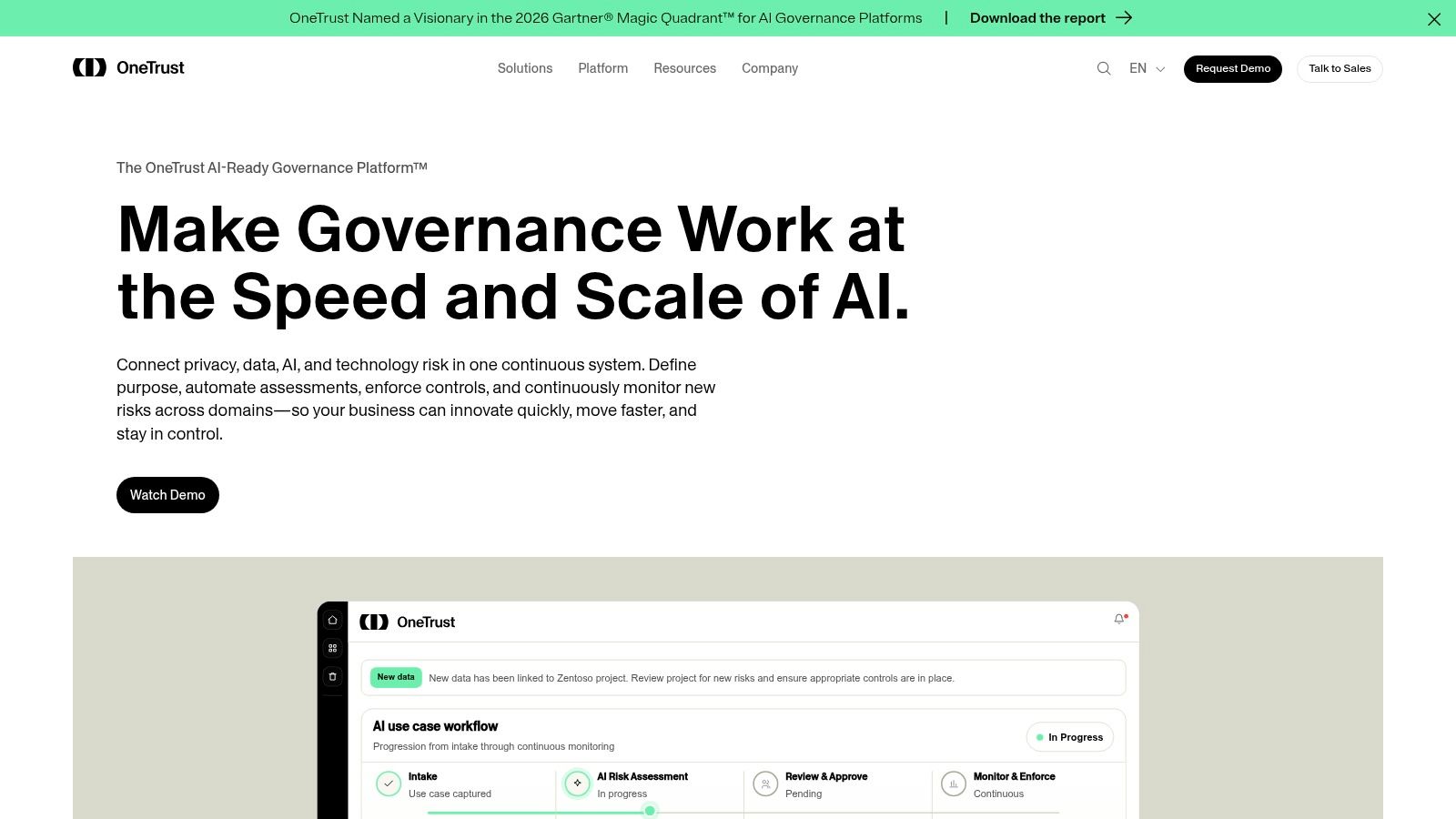
3. SAI360
SAI360 fits organizations that want centralized policy management, regulatory compliance, IT and cyber risk, and audit management in one integrated environment. That makes it especially relevant for insurers and other regulated firms that need their compliance function to operate as a formal program, not a loose collection of spreadsheets and point tools. The platform's strength is administrative control, workflow consistency, and the ability to carry obligations through to attestations and audits.
That breadth helps when underwriting touches multiple control areas. For example, if a firm needs consistent policy acknowledgment, regulatory tracking, and audit workflows around underwriting operations, SAI360 can support the oversight layer. It can also help teams document control execution across departments, which is useful when compliance leaders need a structured record of who approved what and when.
The limitation is that SAI360 is still a GRC suite, so it operates above the note-level decision itself. It can record that a control exists and that a team followed a workflow, but it won't replace a specialist tool that reads underwriting notes against insurer-specific rulebooks in seconds. In underwriting environments, that distinction matters because the risk often hides in the rationale, not just the workflow status.
A good fit for SAI360 is an enterprise that already knows it needs a durable compliance operating system. The platform is less attractive for teams that need fast deployment on a single use case, because broad suites usually bring more administration and configuration work. If you need the compliance department to own a formal, auditable program across multiple domains, SAI360 is in the right category.
Website: SAI360
Image: 
4. MetricStream ConnectedGRC
MetricStream ConnectedGRC is a classic enterprise governance, risk, and compliance platform. It is built for organizations that need regulatory compliance management, policy management, IT compliance, and third-party risk under one roof. In financial services and insurance, that kind of breadth is useful when the compliance function has to map obligations to controls and keep a single source of truth across business units.
Its best use case is program governance. If underwriting, security, vendor oversight, and audit teams all need to work from shared control definitions, MetricStream gives you the structure to do that. It is particularly relevant where regulators, internal audit, and management all want visible traceability from obligation to control to evidence.
The downside is implementation weight. Large GRC platforms usually require serious process design, configuration, and administration. That burden can be justified when the program is sprawling, but it becomes expensive friction if the need is narrower, such as note-level underwriting QA or continuous evidence collection for a specific framework.
Broad GRC tooling earns its keep when multiple teams need one compliance language. It struggles when the organization only needs to inspect a single decision path at very high volume.
MetricStream is strongest as a system of record for compliance governance. It is not designed to read underwriting notes line by line and compare them against insurer-specific guidance before binding. That means it can govern the environment around underwriting, but it can't replace the specialized QA layer that catches rationale and documentation gaps at the point of decision.
Website: MetricStream ConnectedGRC
Image: 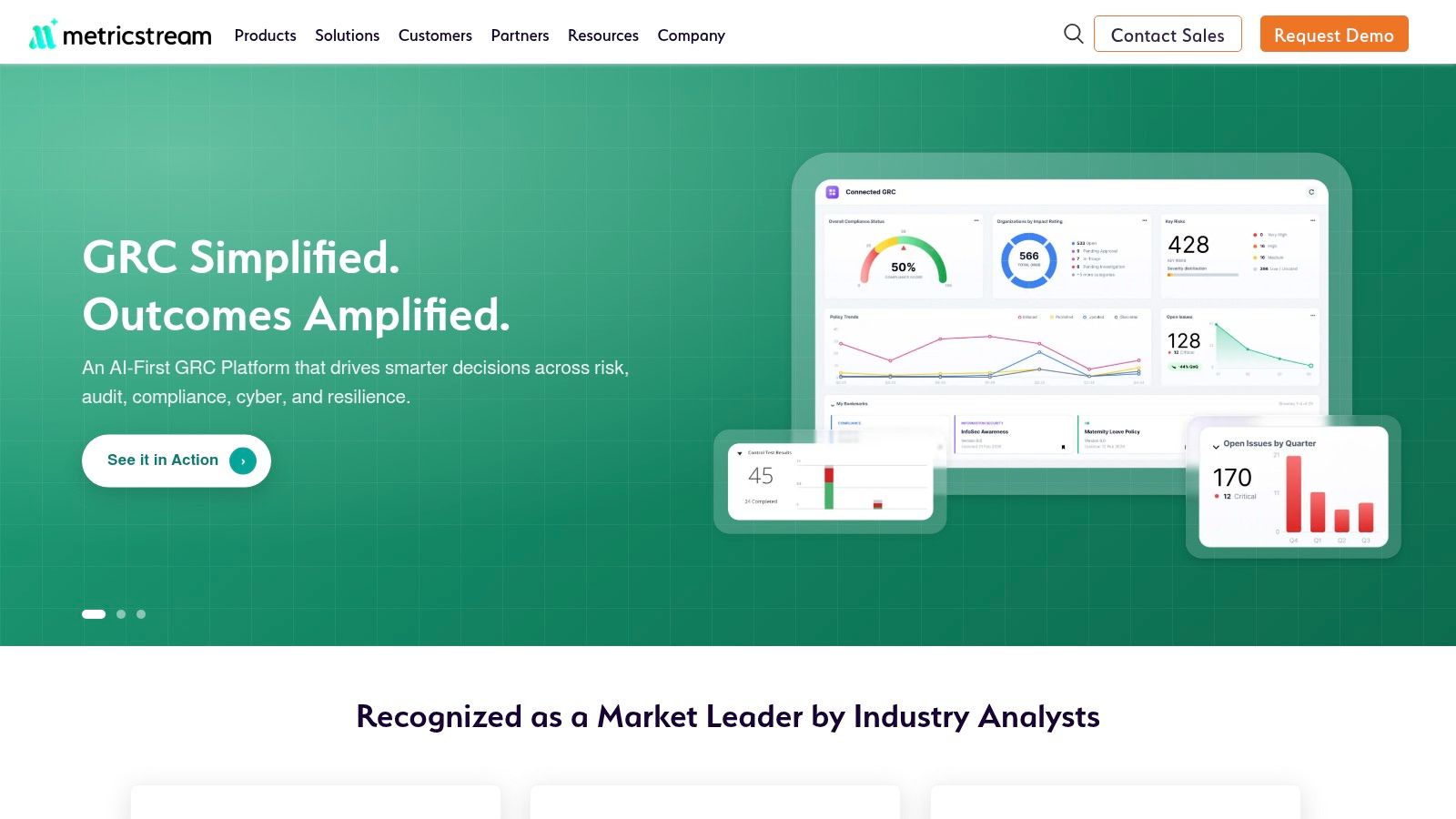
5. Archer
Archer, formerly RSA Archer, is one of the more established names in enterprise risk and compliance software. It is built for regulatory and corporate compliance management, regulatory change, and IT regulatory management, which makes it a strong fit for large organizations that need auditable workflows and highly configurable controls. Its value is less about speed and more about how it can model complex compliance structures.
That makes Archer relevant to underwriting governance where the insurer wants a formal record of obligations, control ownership, exceptions, and remediation. If a business line needs to prove how regulatory change gets translated into policy updates and control tasks, Archer can support that process. It also makes sense where auditability is a first-order concern and teams are willing to carry the administrative load of a deep platform.
The trade-off is effort. Archer's configurability is one of its advantages, but it can also make implementation and day-to-day administration heavier than lighter-weight tools. That can be a good bargain for an enterprise with dedicated GRC staff. It's a poor fit for a team that needs a quick deployment and minimal workflow disruption.
Archer is especially useful as a compliance operating backbone. It tracks change, creates records, and supports governance. It does not, by design, function as a note-level underwriting reviewer. If the core problem is that underwriters are missing or under-documenting guideline logic before binding, Archer won't close that gap on its own.
Website: Archer
Image: 
6. LogicGate Risk Cloud
LogicGate Risk Cloud takes a more modular approach than some legacy GRC tools. Its application-based structure lets teams start with one use case, then add more apps as the program matures. That makes it attractive for compliance teams that want to phase rollout instead of launching a giant enterprise program all at once.
For underwriting-related environments, that phased model can help where different control owners need different workflows. A team might begin with policy management or third-party risk, then expand into regulatory compliance or issue management later. The licensing model also leans toward admins and power users, which can reduce seat sprawl compared with tools that require broad end-user licensing.
The downside is cumulative scope. Modular systems often look inexpensive at the first app, then grow as more applications get added. That's not a flaw, it's a pricing and deployment reality. Buyers should expect to spend more time defining which functions belong in the platform and which belong elsewhere.
LogicGate is strong when the compliance team wants flexibility without starting from scratch. It is weaker when the work is highly specialized and the business needs direct decision-level QA. It can support governance around underwriting, but it doesn't replace a tool that inspects every underwriting note against insurer-specific rules in real time.
Website: LogicGate Risk Cloud
Image: 
7. Hyperproof
Hyperproof is built for compliance operations, not broad regulatory change management. Its core strengths are control libraries, evidence collection, testing, audit readiness, and reuse across multiple frameworks such as SOC 2, ISO 27001, HIPAA, PCI, NIST, and FFIEC. That makes it a good choice for teams that want to centralize controls and avoid duplicating work across frameworks.
The value proposition is straightforward. If your compliance team keeps producing the same evidence for different audits, Hyperproof helps you organize that work into a single operational layer. That's useful for financial services and fintech teams that care about repeatable evidence, standardized testing, and audit engagement workflows. The FedRAMP-hosted option also signals that it's positioned for stricter control environments.
What Hyperproof is not, is a regulatory intelligence or underwriting judgment platform. It won't map a commercial underwriting note to insurer-specific appetite language or catch an omitted pricing rationale before binding. It's designed to prove that controls exist and operate, not to inspect the content of a business decision in detail.
This distinction is why Hyperproof sits in the evidence-management tier of the market. It can make audits less painful and improve control reuse. It can't replace a domain-specific QA layer that examines the underwriting file itself.
Website: Hyperproof
Image: 
8. Drata
Drata is popular with technology companies because it focuses on continuous compliance, automated evidence collection, and control testing for frameworks such as SOC 2, ISO 27001, HIPAA, and GDPR. The platform is designed to shorten audit preparation by pulling in system signals and keeping evidence organized continuously instead of at the last minute.
Its fit in an underwriting context is indirect but still useful. If a firm needs a strong compliance operations layer around security and privacy obligations, Drata can help support the evidence side of the house. It's a good option when the team wants integrations, a clear operational rhythm, and faster audit readiness across a defined framework set.
The boundary is important. Drata is primarily built for attestation-style compliance and security controls, not full regulatory program management. It does not replace a regulatory change team, and it does not review underwriting notes against insurer-specific rules. In other words, it's excellent at showing that controls are in place and monitored, but it does not adjudicate underwriting quality.
If your compliance issue is “prove the controls,” Drata is in the conversation. If your compliance issue is “prove the note is defensible,” you need a different layer.
The publisher also offers a privacy page for reviewers who want to understand data handling more closely, which is useful when compliance teams are evaluating how tools sit beside regulated workflows. Use Drata for evidence and continuous monitoring. Use a specialized review tool when the decision text itself matters.
Website: Drata
Internal reference for data handling context: FigTrig privacy practices
Image: 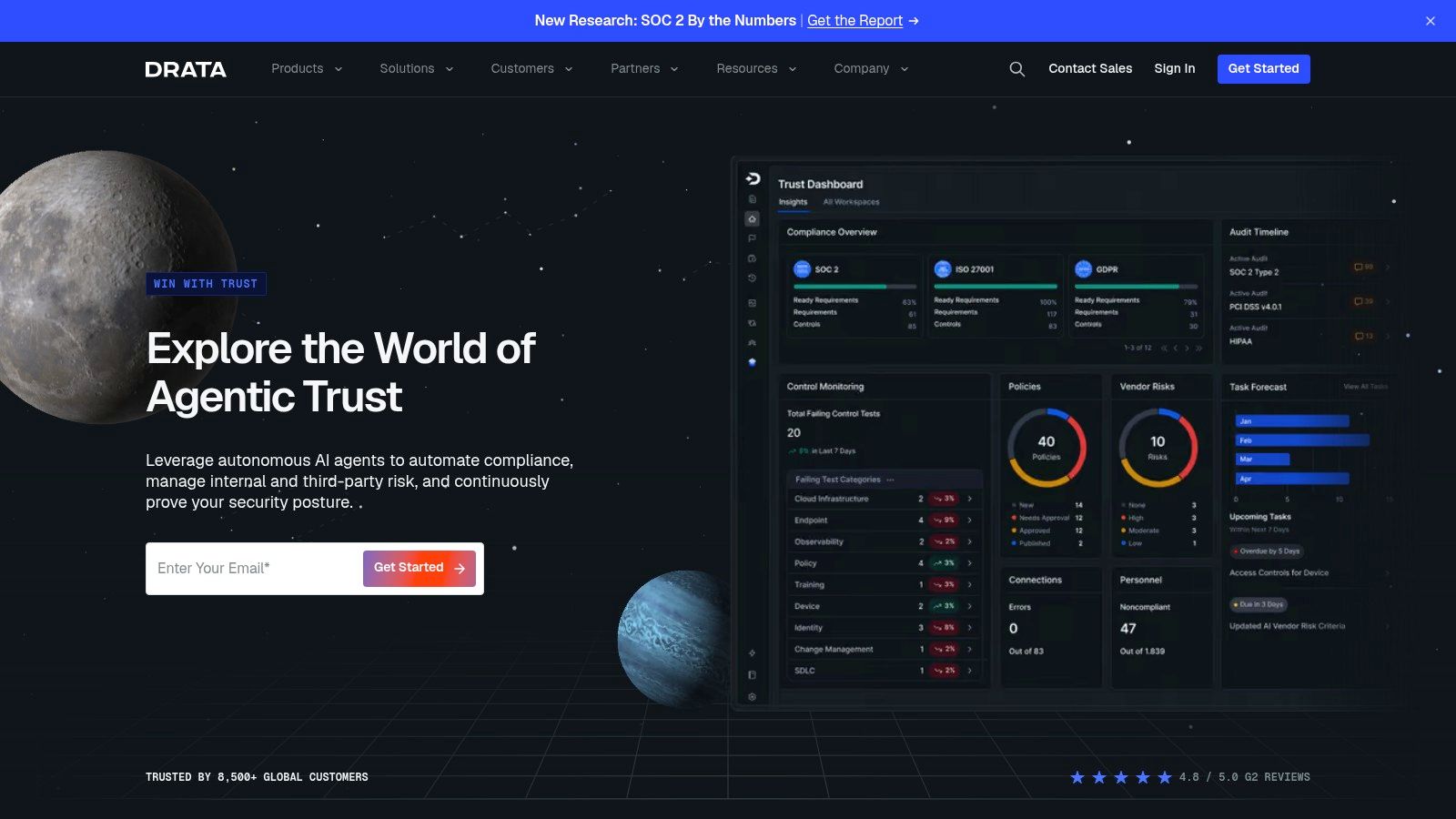
9. Vanta
Vanta is another strong fit in the continuous compliance and audit readiness category. It focuses on automated monitoring of cloud and device controls, multi-framework support, API extensibility, and fast time-to-value for teams preparing for audits. That makes it especially attractive to organizations that need to get to a credible compliance posture quickly.
For underwriting-adjacent use cases, Vanta can help with the security and governance layers that surround the process. If an underwriting platform depends on cloud infrastructure, access controls, or internal devices that need to be monitored and evidenced, Vanta can keep those controls visible. It also has the partner ecosystem many buyers want when they're trying to move fast without building a compliance stack from scratch.
The limitation is category scope. Vanta is mostly centered on security attestations and continuous monitoring, not broader regulatory change management. That means it's helpful when the audit question is, “Are the controls working?”, but not when the question is, “Did the underwriting note follow the insurer's own appetite and guideline logic?”
That's the main dividing line across this list. Vanta is a compliance operations tool. It is not a note-review engine. In a mature stack, it can sit alongside underwriting governance, but it can't be the last reviewer before binding.
Website: Vanta
Image: 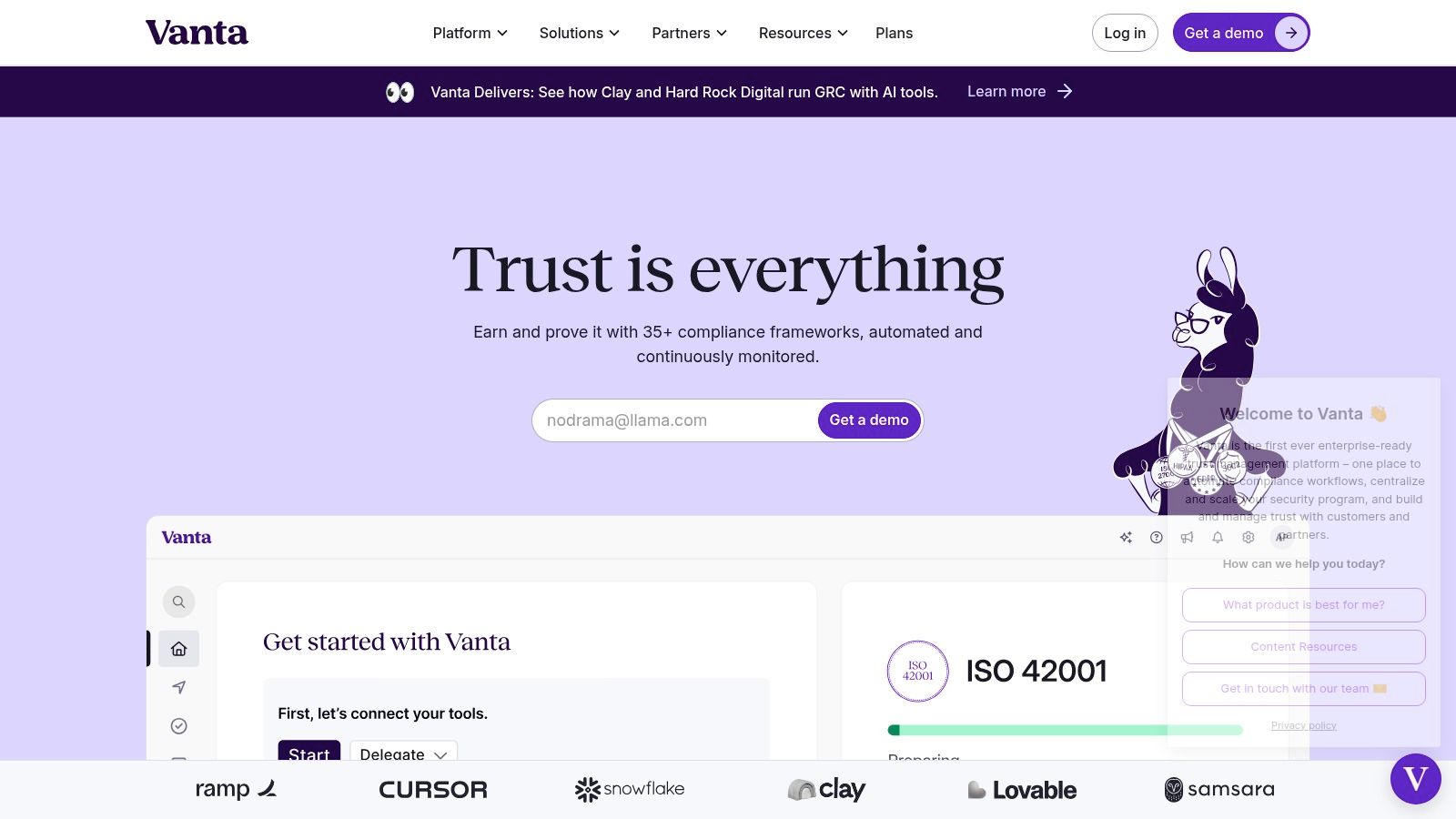
10. Secureframe
Secureframe is positioned for teams that want automated evidence collection, risk management, policy management, vendor risk, trust center, and questionnaire automation in a single platform. It's useful for companies that need to get organized quickly around common frameworks like SOC 2, ISO 27001, HIPAA, and PCI. The transparent starter pricing is a practical advantage for smaller programs that don't want to begin with a long sales cycle.
For underwriting or lending organizations, Secureframe is most relevant where the compliance team needs a cleaner control and evidence workflow around the broader business, not the decision note itself. It can support third-party risk and trust operations, which matter in distributed insurance or fintech environments. It can also help standardize questionnaire handling, which often consumes time across compliance, sales, and vendor management teams.
Its limitation is the same one you see in the evidence-focused tools above. Secureframe is built for compliance operations, not full regulatory change management, and not note-level underwriting review. It helps prove that controls are tracked and artifacts are organized. It does not inspect the judgment inside an underwriting note before a policy is bound.
The internal takeaway for buyers is simple. Secureframe is a good fit when you need a more approachable compliance platform with a visible starting point. It's not a substitute for a specialized QA layer if your real exposure sits in underwriting rationale, authority compliance, or policy-term fit.
Website: Secureframe
Internal reference for terms and conditions review: FigTrig terms
Image: 
Top 10 Compliance Automation Tools Comparison
| Solution | Core capabilities | UX & quality | Value & pricing | Target audience | Unique strengths |
|---|---|---|---|---|---|
| 🏆 FigTrig | 100% automated note review; guideline ingestion; explainable flags; audit trail; real‑time checks | ★★★★★, seconds‑level flags | 💰Quote-based; fast ROI (pilot: £4.2M+ flagged) | 👥 Underwriters, CUOs, MGAs, Compliance & Audit | ✨Guideline‑linked, explainable flags; tenant isolation; rapid <1‑week deploy |
| OneTrust | Privacy, DSAR/consent, third‑party & broader GRC suites | ★★★☆☆ Mature ecosystem; broad UI | 💰Quote-based; modular cost can scale | 👥 Enterprise privacy & GRC teams | ✨Regulatory libraries; modular suites; partner ecosystem |
| SAI360 | Policy & compliance, IT/cyber risk, integrated audit mgmt | ★★★☆☆ Enterprise‑grade; workflowed | 💰Custom pricing for enterprise scale | 👥 Insurers & regulated enterprises | ✨End‑to‑end compliance workflows; audit centralization |
| MetricStream ConnectedGRC | Regulatory compliance, policy mgmt, vendor/IT risk | ★★★☆☆ Robust but implementation‑heavy | 💰Complex licensing; enterprise TCO | 👥 Large regulated firms, financial services | ✨Deep regulatory program support; control mapping |
| Archer (RSA Archer) | Regulatory & corporate compliance, IT regulatory mgmt | ★★★☆☆ Highly configurable; admin intensive | 💰Quote-based; varies by solution | 👥 Large enterprises needing auditable programs | ✨Auditable workflows; extensive configurability |
| LogicGate Risk Cloud | App‑based GRC, modular rollout, admin‑focused licensing | ★★★★☆ Flexible; admin/power‑user friendly | 💰Quote-based; cost rises with apps | 👥 Teams seeking phased deployments & admins | ✨Modular apps; reduces seat sprawl |
| Hyperproof | Unified control library; automated testing & evidence reuse | ★★★★☆ Strong continuous evidence UX | 💰Quote-based | 👥 Compliance ops, fintech & financial services | ✨"Test once, apply many" evidence reuse; audit workflows |
| Drata | Continuous compliance, pre‑mapped frameworks, integrations | ★★★★☆ Fast setup; audit readiness | 💰Quote-based; framework plans | 👥 Tech firms & security/compliance teams | ✨Mature integrations; continuous monitoring |
| Vanta | Continuous monitoring for SOC2/ISO; fast time‑to‑value | ★★★★☆ Quick implementation | 💰Quote-based | 👥 Startups & SMBs preparing audits | ✨Fast setup; partner auditor network |
| Secureframe | Automated evidence collection; risk & policy mgmt; vendor risk | ★★★★☆ Starter→enterprise tiers | 💰Transparent starter pricing; enterprise quote | 👥 Small‑to‑mid companies, audit prep teams | ✨Entry pricing; scales to advanced needs |
Match the Tool to the Control Point
The cleanest buying rule is to match the platform to the control point, not the category label. If you need centralized policy, regulatory change, risk, and audit programs, the broader GRC suites, such as OneTrust, SAI360, MetricStream ConnectedGRC, Archer, and LogicGate Risk Cloud, belong at the center of the stack. They give compliance leaders a system of record for obligations, control ownership, approvals, and audit evidence. That is where governance belongs, and it's the right choice when multiple teams need one compliance operating model.
If your main pain is evidence sprawl, recurring audit prep, and continuous monitoring across known frameworks, Hyperproof, Drata, Vanta, and Secureframe are closer to the mark. They focus on compliance operations, control testing, artifact collection, and audit readiness. They're strongest when the question is whether controls are functioning and whether evidence is ready when someone asks for it. They are less effective when the organization needs deep regulatory change management or a decision-level review of business judgment.
FigTrig sits in a different category. It is the best fit when the priority is note-level underwriting review before binding, especially in commercial insurance, delegated authority operations, and other underwriting-led workflows. It checks every underwriting note against the insurer's own rulebook, produces explainable flags, and preserves an audit-ready record tied to specific guideline sections. That's a different job from a GRC suite or a compliance evidence platform, and trying to force one platform to do all three usually creates blind spots.
During evaluation, validate a few things directly. Check guideline ingestion, rule mapping, workflow integration, explainability, audit-trail ownership, data controls, implementation effort, and commercial scope. Ask whether the system can sit alongside existing underwriting tools without disrupting production, whether it can defend a decision trail to auditors, and whether the vendor's licensing model matches your operating reality.
The strongest architecture often combines both layers. Use a system of record for governance and compliance operations, then add a focused underwriting QA layer where the actual decision risk lives. That gives you centralized control without asking a general-purpose platform to perform a specialist job it wasn't built to do.
FigTrig is built for the exact gap this comparison exposes, note-level underwriting review that general compliance software doesn't cover well. If you're weighing GRC suites against continuous compliance tools and want a layer that checks underwriting decisions against your own guidelines before binding, visit FigTrig and see how it fits beside your existing stack.